1. Home
  2. Finance

Solar and battery finance in Melbourne

Paying for solar, batteries or electrical work? Cash, a government interest-free loan, a green loan, a 0% plan, business finance or a PPA. How each one works, what it really costs, and a calculator to check the repayments.

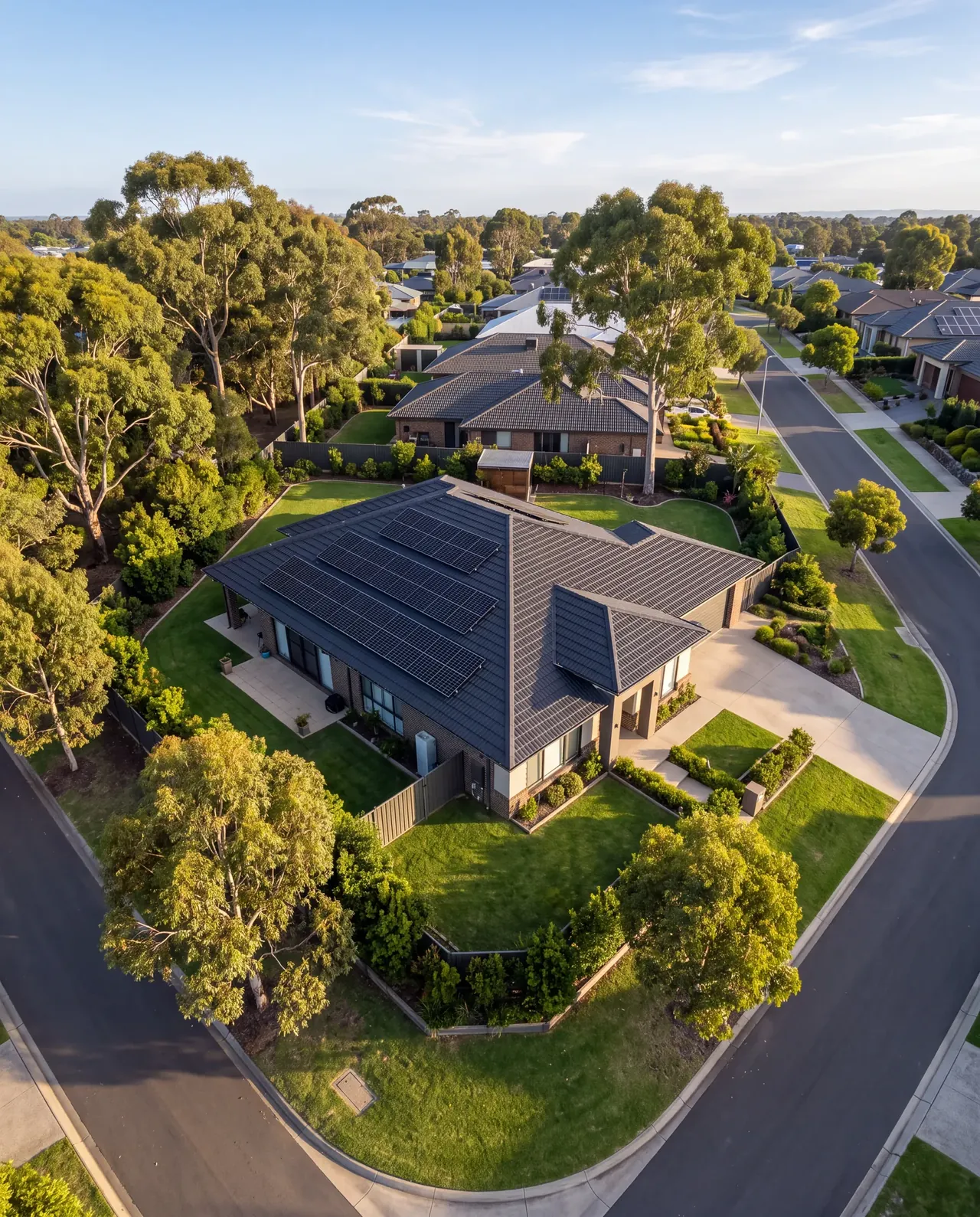
Aerial view of a Melbourne home with solar panels

Solar loan repayment calculator

See the monthly repayment, the total you repay and what interest and fees cost. Try the same amount at two rates, or a shorter term, to see the difference.

For
$650
$15,000
9.5%
7 years
$0

Monthly repayment

$0

$0Per week
$0Total repaid
$0Interest and fees

Repayment against your bill saving

Repayment$0
Bill saving$0

$0Saved a year
$0Saved during the loan
0 yrsTo earn back the total

Will it pay for itself?

For a business, the saving depends on when you use power. We model it from your interval meter data and show the repayment against the saving in your proposal.

The same loan at other rates

An estimate, not a quote or a credit offer. The lender sets your rate after a credit check. Bill savings use the same rough guide as our savings estimator: solar covers about a third of a home’s use, a battery about another third.

Solar and battery finance for homes

The main ways Melbourne households pay for solar, batteries and electrical upgrades, cheapest first for most people.

OptionHow it worksTypical rateSuits
Pay upfrontNo interest or fees. Cheapest overall if the money is sitting idle.NoneAnyone with savings
Solar Victoria interest-free loanUp to $1,400 for solar panels, repaid monthly over 4 years ($29.17 a month). Household income under $150,000 and property under $3 million.0%Eligible owner-occupiers, alongside the $1,400 rebate
Green personal loanFixed rate for solar, batteries and efficient appliances. One lender advertises from 9.49% (10.98% comparison rate), $2,000 to $60,000 over 2 to 10 years.About 9.5% to 13%Owning it now without touching the mortgage
0% interest payment planNo interest, but an establishment fee and a weekly account fee (one plan: $75 plus $2.30 a week). Some sellers raise the price to cover what the lender charges them.0% plus feesShort terms, if the price matches the cash price
Home loan top-up or green home loanUsually the lowest rate, but spread over 20 to 30 years it can cost more in total. Pay it off faster to avoid that.Your home loan rateLarge jobs, such as solar and a battery together

Commercial solar finance for businesses

Since 1 October 2026, commercial solar up to 1 MW gets the upfront certificate discount, often about 20% off, which shrinks what you need to borrow.

OptionHow it worksTypical rateSuits
Pay upfrontSmall businesses (turnover under $10 million) can deduct each asset under $20,000 in the year it is installed; bigger systems are depreciated.Tax benefitProfitable businesses with cash
Equipment finance or chattel mortgageYou own the system from day one and repay over 1 to 7 years. The ANZ and CEFC program takes 0.8% a year off eligible energy upgrades.Lender’s business rateOwners who want the savings and the asset
Solar PPAA provider pays for and owns the system; you pay per kWh used, below the grid rate, for 10 to 25 years.Rate per kWh, no loanLeased sites and no capital outlay

Before you sign any finance

  • Get the cash price in writing first. Then compare the total you would repay on finance against it.
  • Read the comparison rate, not just the headline rate. It includes most fees.
  • Check the fees: establishment, monthly or weekly account fees, late fees and early payout costs.
  • Size the system to your bills, not to a repayment. A bigger system on finance is not always a better deal.

Finance with Energen

We don’t lend money ourselves. Ask about finance when we quote and we can put you in touch with a finance broker.

Sources

  1. Finder: solar and battery finance, how to pay for your system (updated 25 Sep 2026)
  2. SolarQuotes: buy now, pay later solar tricks and traps
  3. Solar Victoria: solar panel rebate and interest-free loan
  4. Australian Taxation Office: $20,000 instant asset write-off
  5. Treasury: more affordable finance to help businesses cut energy costs (ANZ and CEFC, 31 Jul 2026)
  6. Energy Matters: the 1 October SRES expansion for commercial solar up to 1 MW

Last checked 12 November 2026. Rates and rules change; confirm with the lender or provider before you sign.
Straight answers

What people ask most on solar forums, and the answers that hold up.

Ask us a question

What is the cheapest way to finance solar in Victoria?

For eligible households, the Solar Victoria interest-free loan of up to $1,400 alongside the $1,400 panel rebate, then cash for the rest. After that, compare a green loan’s comparison rate with your home loan rate over the same short term.

Is 0% interest finance really free?

Not quite. Plans charge fees: one charges $75 to set up and $2.30 a week, about $1,271 over 10 years. Lenders also charge the seller a fee, often 15% to 25% of the price, and some sellers add it to the price. Always ask for the cash price and the finance price side by side.

Should I pay cash or borrow?

The rule most people land on: if the repayment is smaller than what the system saves you each month, you are ahead from day one. If you have cash sitting in an account earning little, paying upfront avoids interest altogether.

Is it cheaper to put it on my home loan?

The rate is lower, but a 25 year loan term turns a small rate into a lot of interest. If you add it to the mortgage, pay that amount off over a few years, not the life of the loan.

Does the Solar Victoria loan cover batteries?

No. The Solar Victoria battery loan has closed. The interest-free loan of up to $1,400 is for solar panels, alongside the panel rebate, for eligible households.

Will a payment plan affect my credit score?

It can. Since June 2025, buy now pay later providers need a credit licence, must check you can afford the repayments, and the accounts are reported like other credit.

Can my business write off solar?

Small businesses with turnover under $10 million can immediately deduct each asset costing under $20,000. Larger systems are depreciated. Ask your accountant how it applies to you.

Do you charge more if I use finance?

Ask us for the cash price and we will put it in writing. If you use finance, your lender’s fees and interest are between you and the lender, and they show on the loan contract.

What is a PPA, and is it a loan?

No. Under a solar PPA a provider owns the system and you pay for the power, not the panels. It suits businesses more than homes. How solar PPAs work.

CallGet a quote