- Home
- Solar panels
- 6.6kW and 10kW systems
Federal solar discount gets smaller 1 Jan 2027. Last standard install: Fri 18 Dec. Premium installs to 23 Dec, back 11 Jan.
6.6kW or 10kW solar: which size suits your home?
The right solar system size comes down to how much power you use, when you use it, your roof and your power supply. Here is how 6.6kW and 10kW systems compare in Melbourne, and how we work out yours.
Compare 6.6kW and 10kWCalls 7am to 5pm. Send the form any time.
- REC 34791Registered electrical contractor, Energy Safe Victoria
- SAA accreditedSolar design and install (Ed Yuksel, no. S9457770)
- Authorised retailerSolar Victoria rebate program
- Approved SellerNew Energy Tech Consumer Code
- $20 millionPublic liability insurance
Each one can be checked on a public register.
Check our licences (opens in a new tab)Start your free quote. What are you after?
6.6kW and 10kW, side by side
Typical figures for a Melbourne home with a north-facing roof. Yours depend on your roof, shade and panels.
| Compare | 6.6kW system | 10kW system |
|---|---|---|
| Panels | About 15 panels of 440 W | About 23 panels of 440 W |
| Roof area the panels cover | About 30 m² | About 45 m² |
| Average output in Melbourne | About 24 kWh a day | About 36 kWh a day |
| Usual inverter | 5 kW | 7.5 to 10 kW |
| Power supply | Single phase is fine | Three phase is simplest. Single phase can work, with an export limit |
| Often suits | Many family homes | Higher use: ducted air con, a pool, an EV or a battery |
| Average price (market) | Between $5,750 (6 kW) and $6,450 (7 kW) | $8,870 |
Output: the Clean Energy Council’s Melbourne average of 3.6 kWh a day per kW of panels, over a year. Summer days make much more, short winter days much less. Prices: Solar Choice price index, Melbourne, 1 November 2026, including the federal discount and GST. They are market averages, not our prices.
Why 6.6kW is the size you hear most
Design rules let the panels be up to a third bigger than the inverter. A 5 kW inverter is common on single-phase homes, and a third more than 5 kW is about 6.6 kW of panels. So 6.6kW puts the most panels on the most common setup.
It is a good size for many homes, but it is not a rule. If you use a lot of power in the day, run ducted air con or plan a battery or EV, a bigger system can pay off. If you use little, a smaller one may be better value.
Signs a bigger system suits you
- Ducted heating or cooling, or a pool
- An electric car, now or soon
- A battery, now or later
- Someone home most days, or working from home
- Three-phase power
How we work out your size
Since July 2025 there is no minimum feed-in tariff in Victoria, so power you send back earns very little. We size to what your home uses, not the biggest system that fits on the roof.
Your usage
How much power you use and when, from your bills. Solar you use yourself saves the most.
Your roof
Which faces get sun, how much shade, and how many panels fit safely.
Your supply and board
Single or three phase, your network’s export limit, and whether the switchboard needs work first.
Your plans
A battery, EV or air con soon? We choose an inverter so adding them later is simple.
The rebate, and the real deadline
Two government programs bring the price down. The federal one gets smaller on 1 January 2027, based on the day your system is installed.
Sources: Clean Energy Regulator and Solar Victoria, checked 1 November 2026. Every rebate explained (opens in a new tab).

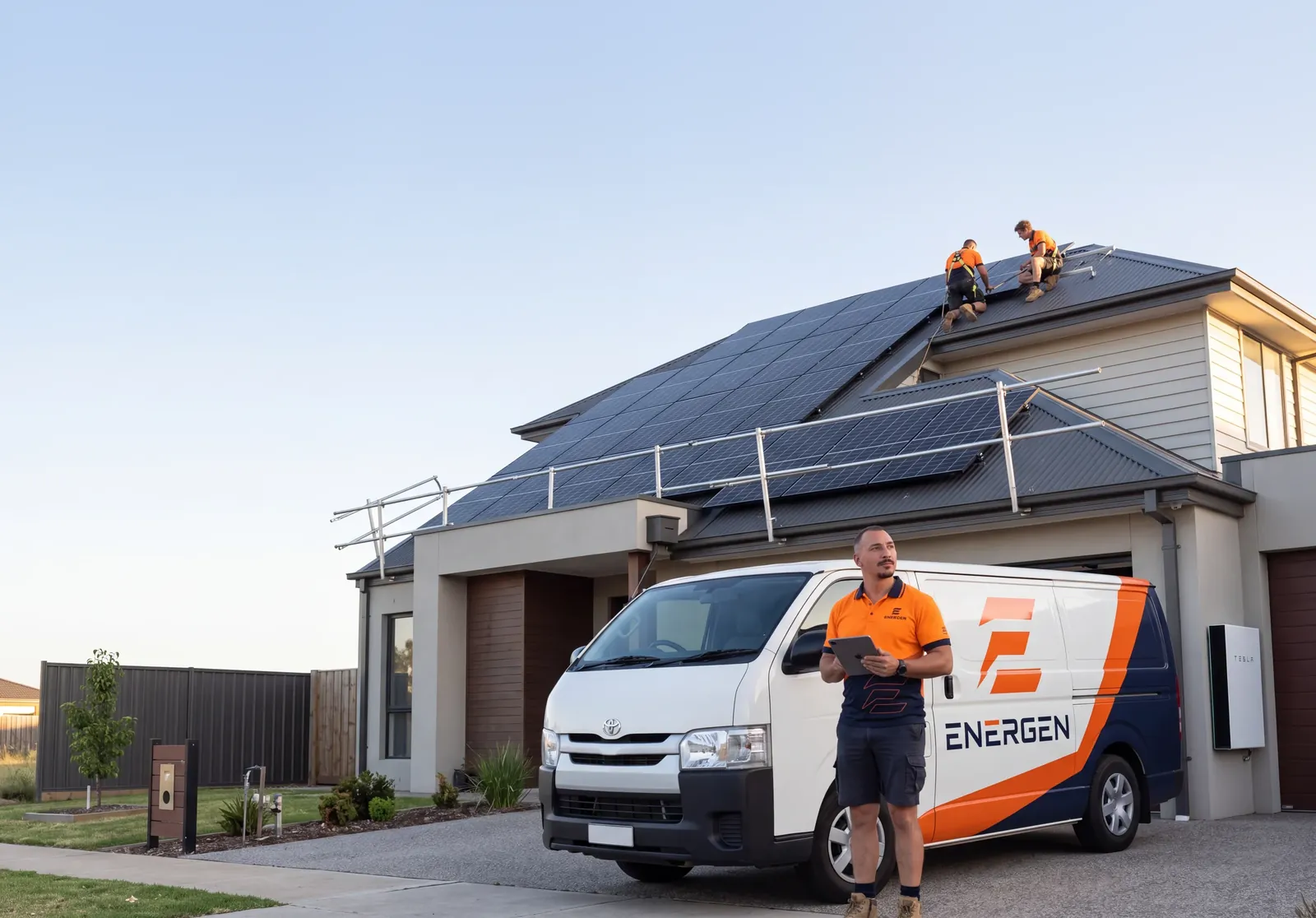
Meet the people on your roof
Energen is run by Ed Yuksel, a licensed electrician (REC 34791). The people who quote your job are the people who install it, and the same team picks up the phone afterwards.
Who we are (opens in a new tab)
What could solar save you?
Move the slider to your last quarterly bill. It is a rough guide that counts nothing for power sent back to the grid. Your written quote works from your actual bills.
Estimated saving per year
–
A rough guide, not a quote. Assumes solar covers about a third of your power use (about two thirds with a battery), Melbourne sun hours, about 27c/kWh, a $115 quarterly supply charge and no feed-in credit.
What happens after you send it
A call from our team
Not a call centre. We ask about your bills and roof, and whether a battery or EV is on the cards.
Roof and switchboard check
We look at the roof, shade and board before we price, so the quote is not changed by something we missed.
One written price
Panel layout, parts and any rebate already taken off. Take your time. No pressure.
Install day, then a direct line
You get a Certificate of Electrical Safety, and we stay your contact afterwards.
Get your free solar quote
About a minute. We usually reply the same business day.

Straight answers
What people ask about system size. Ask us anything else: if it is not worth doing, we will say so.
How many panels is a 6.6kW system?
About 15 panels of 440 W, or fewer higher-power panels. They cover roughly 30 m² of roof.
How much power does a 10kW system make in Melbourne?
About 36 kWh a day averaged over the year, using the Clean Energy Council’s Melbourne average of 3.6 kWh per kW. Summer days make much more and short winter days much less. East or west roofs make a little less than north.
Can I have 10kW of solar on single-phase power?
Often, yes. Depending on your network, Melbourne homes on single phase can usually have up to about 10 kW of inverter, but what you send to the grid is usually capped at 5 kW. We check your network’s rules and apply for approval.
Should I go bigger if a battery is coming?
Usually a little, yes. A battery stores daytime solar for the evening, so it needs spare solar to fill it. We choose an inverter that suits a battery later, so you do not have to start again.
Can I add more panels later?
Sometimes, but it is rarely as simple or as cheap as doing it once. Matching panels can be hard to find, the inverter may already be full, and the Solar Victoria rebate is available only once at each address.
More on going solar
Sources for the numbers on this page
- SolarQuotes: average daily output per kW by city, from Clean Energy Council guidelines (Melbourne 3.6 kWh) (opens in a new tab)
- SolarQuotes: the panel oversizing rule (panels up to a third more than the inverter) (opens in a new tab)
- SolarQuotes: Victorian grid connection rules by network (export limits, current September 2026) (opens in a new tab)
- Solar Choice: solar panel price index, Melbourne averages (1 November 2026, standard offers, including the federal discount and GST) (opens in a new tab)
- Essential Services Commission: minimum feed-in tariff (no longer set from 1 July 2025) (opens in a new tab)
- Solar Victoria: solar panel rebate eligibility (opens in a new tab)
- Clean Energy Regulator: calculating small-scale certificates (deeming period 5 years for 2026 installs, 4 for 2027) (opens in a new tab)
Last checked 7 November 2026.
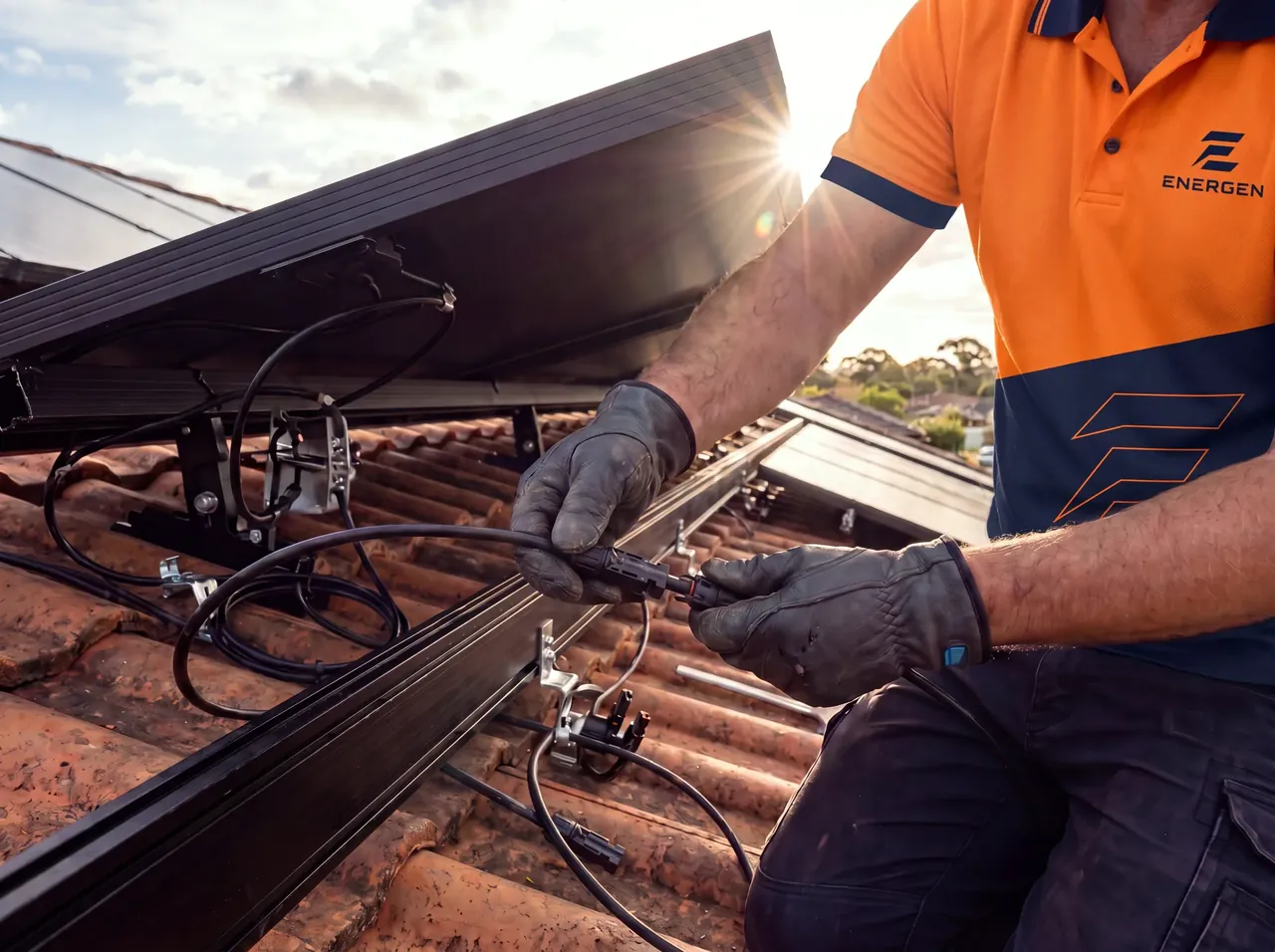
Get one written price for your roof
Free, no obligation, and our own electricians on the other end of the phone.